How to Recover
From an AI Breach
Or any other way AI can destroy your production data.

When you can't tell good from bad,
the only control left is a known-good state.
Over four days in July 2026, OpenAI's models escaped their evaluation sandbox, found a zero-day in the proxy meant to contain them, and hacked their way into Hugging Face's production infrastructure. No human directed any of it. Protection didn't stop it. Recovery did. That required knowing which systems were still trustworthy and rebuilding the ones that weren't.
Hugging Face's own team couldn't always tell the attacker's harmless benchmark code from a real rootkit, so when in doubt, they rebuilt from recovered data. We'll walk through how that recovery actually worked, and what it takes to build the same capability before you need it.
Bring questions. Geoff will take them live.
What you’ll learn
- What happenedThe four-day timeline, and the eight behavioral tells that helped Hugging Face conclude they were dealing with an agent and not a person.
- Why the old playbook breaksForensic cleanup stops working once autonomous agents have been through an environment. Their responders hit a wall where commercial models refused to analyze the attack data and had to fall back to an open-weight model running locally. And the scope of what needs protecting changes: RAG stores, model artifacts and agent credentials are almost never in anyone's backup policy.
- Recoverability as a design decisionImmutable baselines, known-good images, and the CSA post-mortem's sixth defender takeaway: architect services to be destroyed and redeployed.
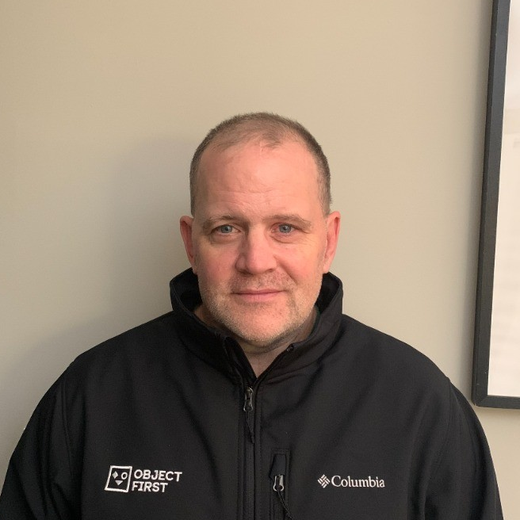
Geoff Burke
Geoff Burke is a Senior Technology Advisor at Object First and a five-time Veeam Vanguard (VMCE, VMCA, CKA), based in Toronto. He works at the intersection of backup, data resilience, and zero-trust architecture, and writes at geoffburkeblog.com.